
The Prophet Mohammed is buried in the opulent Prophet's Mosque in the centre of Medina in Saudi Arabia. Every year, two million Muslim pilgrims visit Islam's second holiest site.
The Masjid al Nabawi, better known as the Prophet's Mosque, in Medina is the second holiest site in Islam after the al-Haram Mosque in Mecca. It houses Muhammad's final resting place under the famous "Green Dome" and, together with the al-Haram Mosque and the al-Aqsa Mos que in Jerusalem, forms the three holiest sites in Islam.
Also after the al-Haram Mosque, the Prophet's Mosque is also the second largest mosque in the world. With its massive dimensions, it offers a truly overwhelming sight.
Construction of the Prophet's Mosque
The first building on what is now the site of the Prophet's Mosque was the house of the Prophet Muhammad himself. It was built in 622 together with a mosque that was also a community centre and school. The teachings of the Koran were proclaimed from a raised platform.
If it were not for the al-Quba mosque just outside Medina, the Masjid al Nabawi would be the first mosque ever built. The architectural basis of the mosque, with several gates, a shaded place for prayer and an inner courtyard, has since been used for all mosques around the globe.
Only seven years after its construction, the mosque was enlarged to double its size of 50 by 50 metres (today it is about 100 times larger) due to the increasing number of Muslims. Further extensions were made by various rulers, from the Umayyads and Abbasids to the Mamluks, Turks and Saudis.
In the 20th century, under the Saudi rulers, the mosque was expanded into a truly massive funerary temple. In 1909, the Prophet's Mosque was the first building in the Arabian Peninsula to be equipped with electric light.
The mosque, built under the Ottomans, is bordered by the four inner minarets. The six outer minarets were built under Saudi King Fahd and surround the "new mosque", which is entirely lined with precious marble. The ten minarets of the Prophet's Mosque reach up to 105 metres in height. Muhammad Bin Laden, father of the later Al-Qaeda leader Osama bin Laden, was also instrumental in the expansion of the Prophet's Mosque.
Visit to the Prophet's Mosque
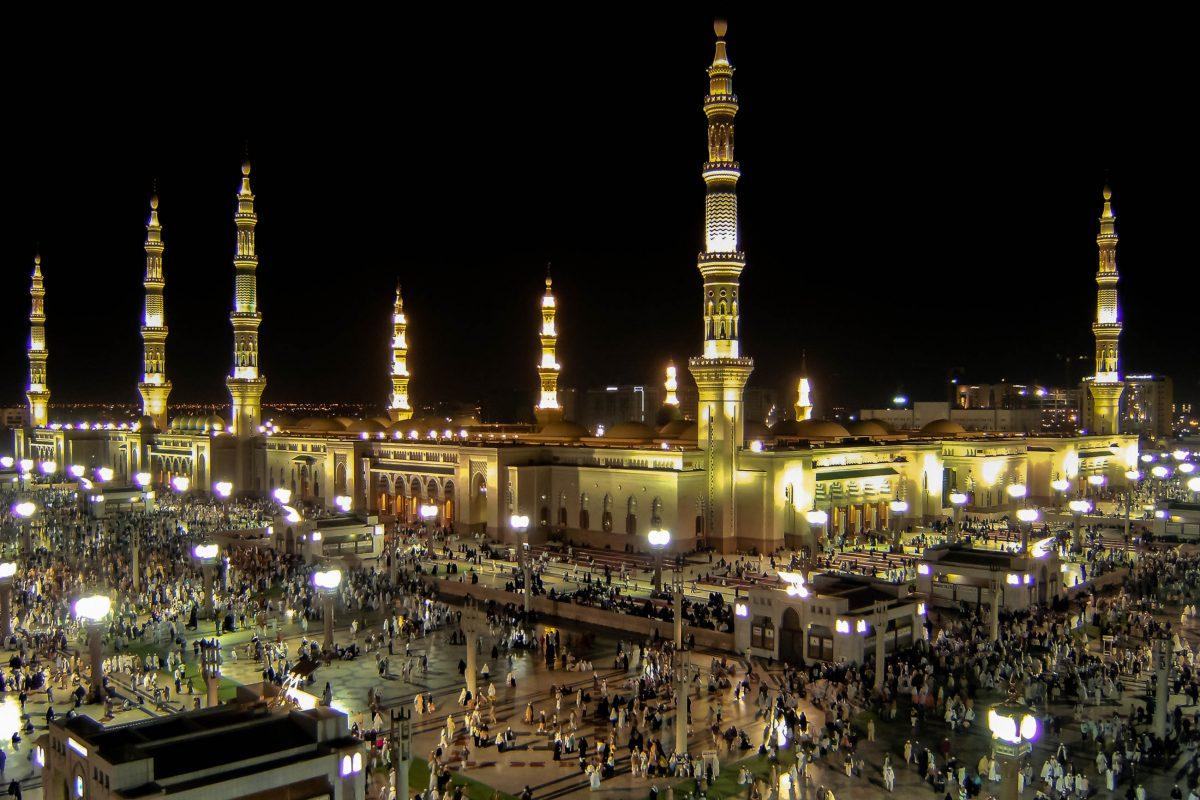
The Prophet's Mosque has an enormous capacity of 1.6 million worshippers. For the Hajj, the traditional pilgrimage to Mecca, many pilgrims also visit Medina and so the mosque can be increased to two million visitors. Around the mosque in the centre of Medina, numerous hotels, shops and markets cater to the masses of pilgrims who travel to Medina, especially during the Hajj. Find places to stay at https://www.hotels-saudi-arabia.com/en/mecca-hotels-19483/.
The Masjid al Nabawi is one of the most important pilgrimage sites in Islam. According to Mohammed, a prayer said in "his" mosque is worth a thousand times more than a prayer said in any other mosque (except the al-Haram mosque in Mecca and the al-aqsa mosque in Jerusalem). Accordingly, the entire mosque is adorned with magnificent decorations for which the finest and most precious materials were used.
Gigantic dimensions of the Prophet's Mosque
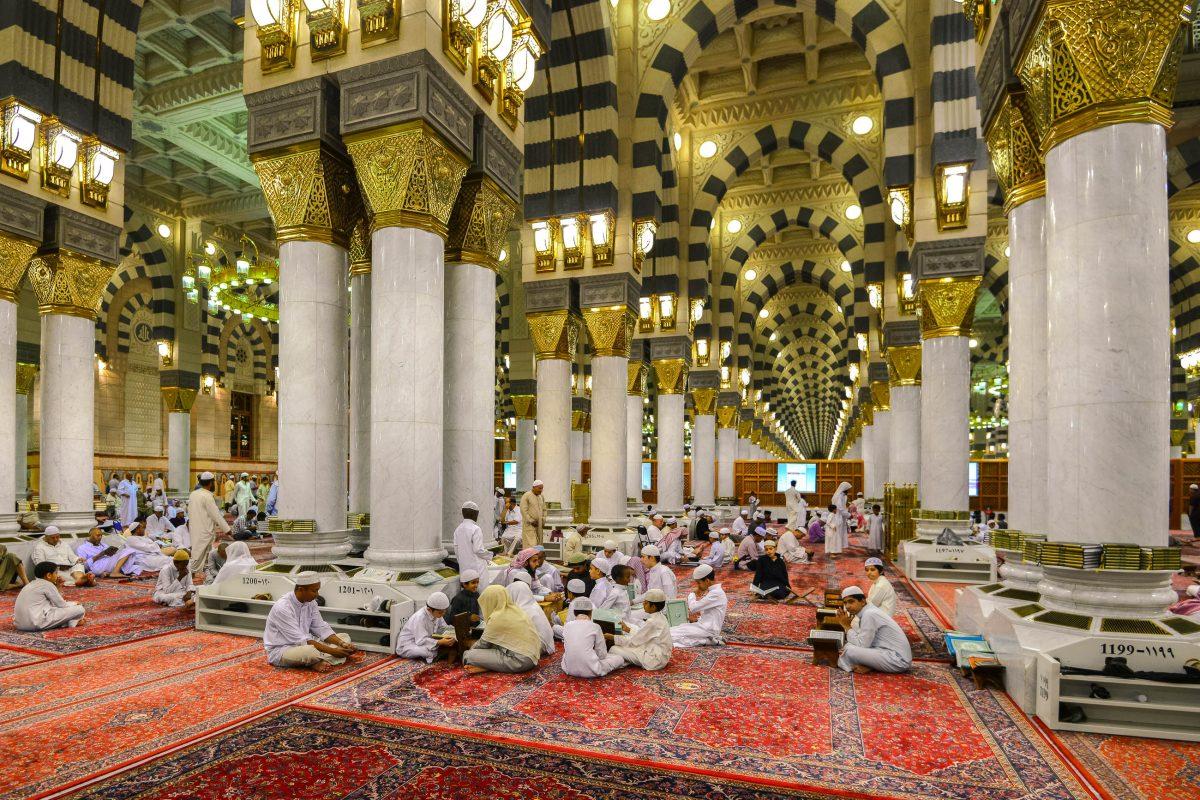
Occupying the entirety of the first floor is the grand prayer chamber of the Prophet's Mosque. This expansive area is enveloped beneath 27 domes, with each dome skillfully designed to let in natural light. For accommodating an overflow of worshippers, the mosque's roof transforms into an additional prayer area where the domes can be enlarged to provide a refuge from the sun's glare.
At the heart of the mosque, you'll find the colossal inner courtyard. Serving as a sanctuary from the unforgiving heat, the courtyard is shaded by expansive canopies whenever torrents of believers congregate for prayer. Once inside, visitors are welcomed by the refreshing ambience, a direct result of the state-of-the-art air conditioning that permeates throughout this majestic edifice.
The Rawdah - The Final Resting Place of Prophet Mohammed
A defining feature of the Prophet's Mosque is the Rawdah. It houses the tomb of Prophet Mohammed, a revered figure in Islam. Visiting this tomb is considered a great honor and opportunity for Muslims all around the world. The tomb is maintained with great respect, marking the passage of a great messenger of peace.
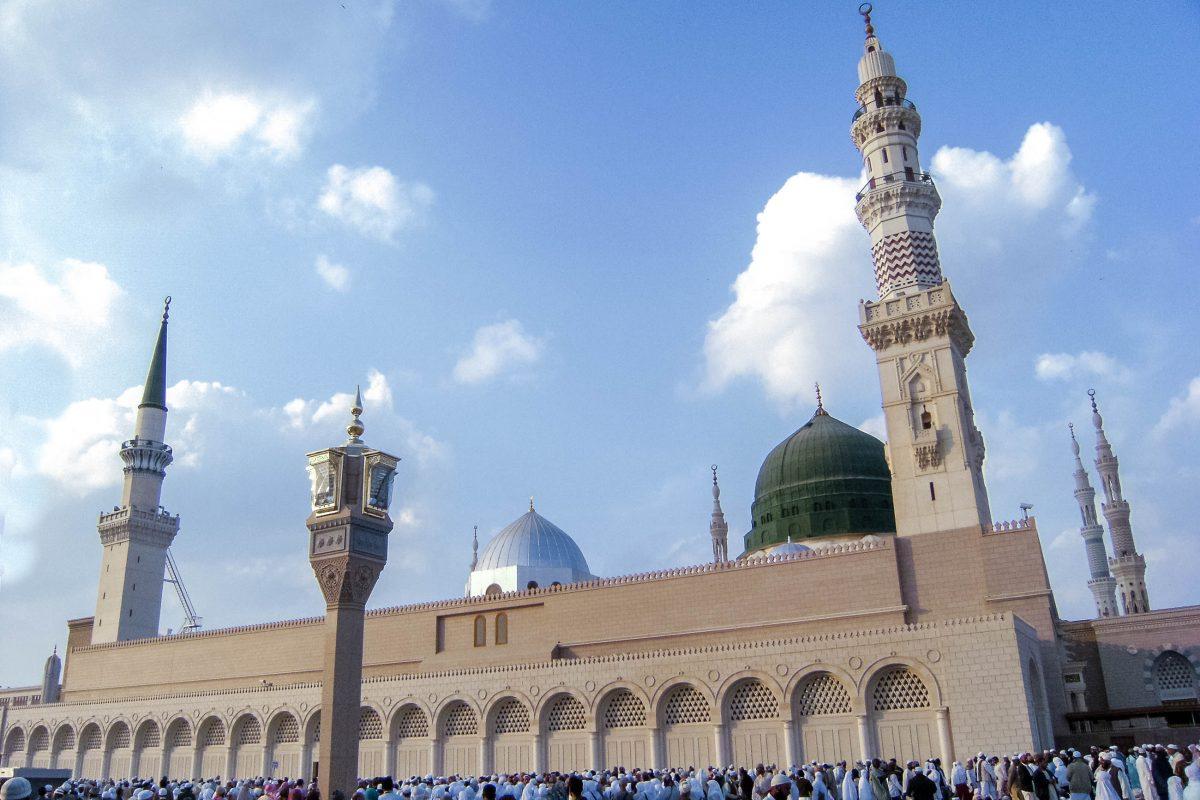
A true architectural marvel, the Masjid al Nabawi is renowned not just for its spiritual significance, but also for its historical and architectural appeal. It is the final resting place of Prophet Muhammad, also housing the tombs of two significant Islamic figures, Abu Bakr and Umar. Located under a significant dark green dome, or Qubbat al-Nabi, the Prophet's burial site is nestled in the southwest corner of the mosque.
The iconic green dome of Masjid al Nabawi was first painted in 1837, transforming the previously wooden dome into what is now popularly called the "Green Dome". With surrounding elements equally noteworthy, The Rawdah, a significant part of the mosque, is cordoned off by an emerald green fence, and is further characterized by a dark green carpet. This sharply contrasts the red carpets laid out in the other parts of the mosque, guarded meticulously by dedicated volunteers.
Riad ul-Jannah - A Glimpse of Heaven on Earth
The space between the Rawdah and the minbar, a pulpit where sermons are delivered on Fridays, holds tremendous significance. Known as the Riad ul-Jannah, Prophet Mohammed is believed to have declared this sacred space as a fragment of heavenly paradise. Testament to the Prophet's words, the Riad ul-Jannah has forever been regarded as a Garden of Paradise, oozing with spiritual magnitude.
No access for non-Muslims!
Unfortunately, non-Muslims are not allowed to enter the mosque - or the entire centre of Medina. If you approach the so-called "haram", the forbidden sacred area, you will be asked for your papers at checkpoints and if they are not Muslim, you will be kindly but firmly escorted around the holy of holies of Medina.
Interesting articles for holidays in Saudi Arabia:
Rub al-Khali (Empty Quarter)
Saudi Arabia facts and figures
PICTURES: Al-Haram Mosque in Mecca
The Top 10 Sights in Oman
The Top 10 Sights in Jordan
The Top 10 Sights in Qatar